
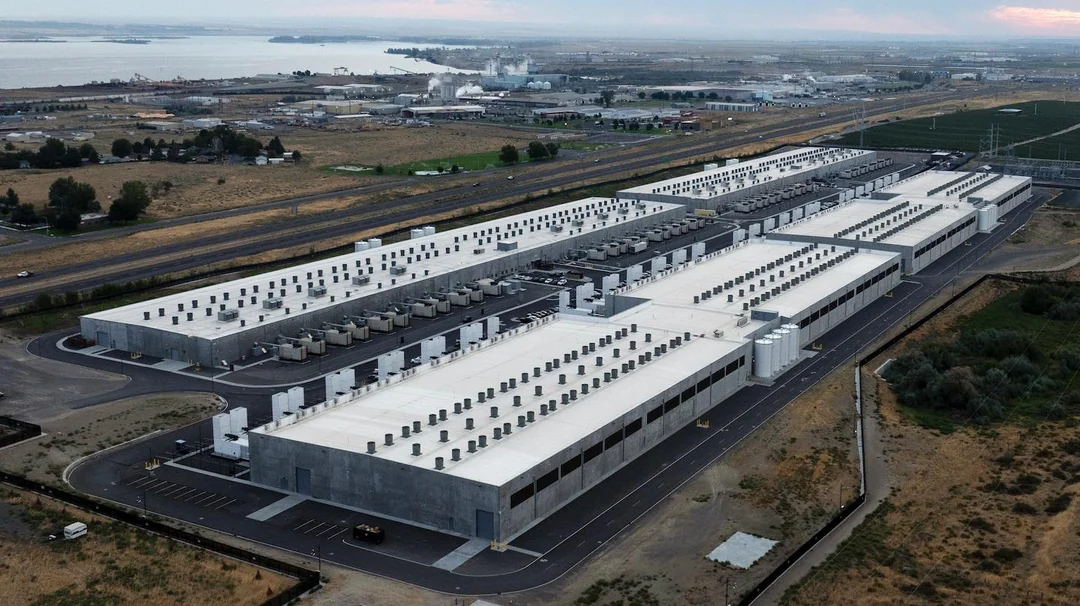
The technological landscape is currently navigating the largest infrastructure investment cycle in history. Globally, the major hyperscalers—including Microsoft, Alphabet, Amazon, Meta, and Oracle—are projected by research firms like the Dell’Oro Group to spend a combined $602 billion on capital expenditures, with roughly 75% of that massive capital pool directly targeting artificial intelligence infrastructure.
However, this unprecedented influx of capital has run headfirst into severe physical and structural shortages. Here is an analytical breakdown of the current global bottlenecks shaping the enterprise technology landscape:
1. The Semiconductor Squeeze and Packaging Constraints
While companies like Nvidia have seen their valuations scale historic heights on the back of insatiable demand for next-generation architectures like Blackwell, physical production remains heavily constrained at the foundry level.
- TSMC’s Multi-Year Warning: TSMC CEO C.C. Wei explicitly clarified to shareholders that the advanced chip shortage is structural and expected to persist for years. Despite TSMC scaling its capital expenditure up to $56 billion to fund massive fabrication build-outs in Taiwan, Arizona, and Japan, advanced node capacity remains completely booked.
- The Advanced Packaging Choke Point: Industry analysts emphasize that front-end wafer fabrication is no longer the sole limit. Advanced 2.5D packaging technologies like Chip-on-Wafer-on-Substrate (CoWoS)—which are essential for integrating high-bandwidth memory (HBM) directly onto AI processors—remain heavily oversubscribed, delaying finished product delivery worldwide.
2. The Macro Shift From Silicon to Grid Power
The primary bottleneck is rapidly expanding from a chip manufacturing deficit into a systemic utility and facility crisis.
- Skyrocketing Megawatts: According to Goldman Sachs Commodities Research, U.S. data center power demand alone is on track to more than double from 31 gigawatts (GW) in 2025 to 66 GW by 2027. Individual AI server racks now feature power densities up to 11 times higher than traditional configurations, straining regional utility grids.
- Infrastructure Component Backlogs: Morgan Stanley Research highlights that grid connection delays and an estimated 49 GW shortfall in available power access by 2028 are slowing down data center activations. This has triggered a massive backlog for auxiliary hardware, extending lead times for liquid-cooling systems, high-voltage transformers, and industrial power distribution units (PDUs).
3. Strategic Diversification and Ecosystem Impact
The tight grip on advanced nodes is forcing major tech firms to reshape their long-term hardware dependencies.
- Foundry Redirection: To hedge against capacity limitations, tier-one technology companies like Google are increasingly diversifying their manufacturing pipelines, placing orders with alternative ecosystems like Intel Foundry and Samsung Foundry to bypass the primary market crunch.
- The Commodity Cascade: Because global memory manufacturers are aggressively redirecting factory space away from consumer electronics and toward high-margin HBM components for AI clusters, standard enterprise storage hardware is seeing reduced manufacturing priority, introducing secondary pricing friction for traditional IT buyers.
Strategic Outlook The AI hardware crunch is no longer an isolated issue for semiconductor engineers; it is a macro-level enterprise logistics challenge. For global technology leaders navigating the next 18 to 24 months, structural forecasting, secondary supply chain validation, and “speed to power” have officially replaced basic procurement as the defining pillars of operational continuity.
Leave a Reply