For years, artificial intelligence mostly lived in software.
It answered questions.
It summarized documents.
It generated images.
It wrote code.
It searched, predicted, recommended, and automated.
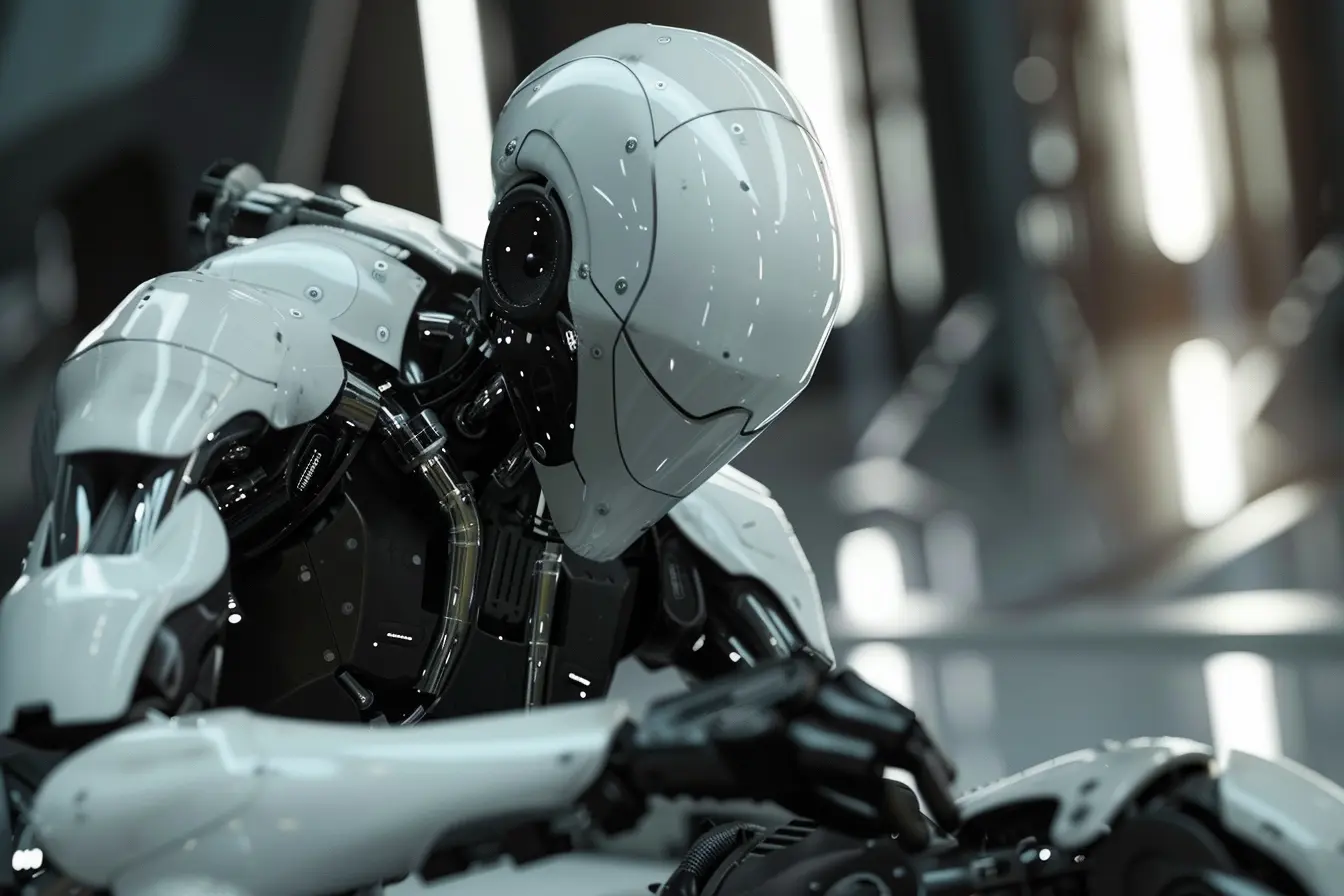
But the next phase of AI is becoming much more physical.
AI is starting to move from chat windows into warehouses, factories, hospitals, retail environments, logistics hubs, data centers, and field operations. Instead of only helping people make decisions, AI-powered systems are beginning to sense environments, interpret movement, guide machines, and support real-world action.
This shift is often described through robotics, but the bigger story is infrastructure.
Because before AI can operate in the physical world, it needs the right foundation behind it: compute, storage, networking, edge systems, sensors, simulation environments, secure data pipelines, and lifecycle support.
The robot may be what people see.
The infrastructure is what makes it useful.
Physical AI Is Different
Traditional enterprise AI works mostly with digital information: text, images, logs, code, documents, transactions, tickets, emails, and structured business data.
Physical AI has a harder job.
It must understand the real world.
That means interpreting camera feeds, depth data, motion, object position, sound, pressure, temperature, location, timing, and unpredictable human behavior. A software model can summarize a document without worrying about gravity. A robot moving through a warehouse does not have that luxury.
A physical AI system must know how to respond when an aisle is blocked, a box is damaged, a surface is slippery, a person steps into its path, lighting changes, or an object is not where it was expected to be.
That is why physical AI is not just an AI problem.
It is a data problem.
It is a hardware problem.
It is an infrastructure problem.
The Hidden Challenge: Training for the Real World
Large language models became powerful because they could learn from enormous amounts of digital information. The internet gave AI systems access to text, images, code, and documents at a scale that was never available before.
Robotics does not have the same advantage.
There is no complete, ready-made dataset showing every possible way to lift a box, sort a part, inspect a machine, avoid an obstacle, or work safely around people. Physical tasks are full of variation. The same action can change depending on object weight, lighting, surface texture, balance, speed, placement, and surrounding movement.
That makes training physical AI slower, more expensive, and more complex.
Developers often rely on human demonstrations, sensor recordings, simulation, and synthetic data to teach AI systems how real-world tasks should work. NVIDIA has reported generating hundreds of thousands of synthetic robot motion trajectories in hours, showing why simulation is becoming so important for robot learning and physical AI development.
That matters for enterprise teams because physical AI will not be deployed like ordinary software.
It will require repeated training, testing, validation, and improvement. It will need environments where models can learn safely before they are trusted in production.
Why Edge Computing Becomes Critical
When AI operates in the physical world, timing matters.
A robot cannot always wait for data to travel to a distant cloud environment, be processed, and return with instructions. In many situations, decisions need to happen close to where the data is created.
That is where edge computing becomes essential.
Factories, warehouses, hospitals, retail locations, and field sites may need local compute resources that can process video, sensor data, operational data, and AI models in real time. The more physical AI grows, the more enterprises will need infrastructure that can support intelligence outside the traditional data center.
This does not mean the cloud disappears.
It means the architecture becomes more distributed.
Some data may be processed at the edge. Some may be stored centrally. Some may be used for model improvement. Some may need to remain local for compliance, security, or latency reasons.
The future of AI infrastructure will not be one location. It will be a connected chain.
Edge.
Data center.
Cloud.
Storage.
Network.
Security.
Lifecycle.
Every part has to work together.
Physical AI Will Create a New Hardware Lifecycle
Enterprise hardware planning has usually centered around familiar refresh cycles: servers, storage, networking, endpoints, and supporting components.
Physical AI adds another layer.
Robotics and AI-enabled machines will create new demands for compute density, storage performance, network capacity, low-latency processing, and secure device management. They will also create larger streams of operational data from sensors, cameras, logs, and connected systems.
That means businesses will need to think beyond buying a single AI-ready server or adding more storage.
They will need to ask:
Can our current infrastructure support real-time data movement?
Can our network handle more connected intelligent systems?
Do we have the right storage architecture for video, sensor, and training data?
Can we support AI workloads at the edge?
Do we have replacement parts and lifecycle support for critical systems?
Can retired equipment be securely processed when it leaves production?
Physical AI will not be successful if the infrastructure behind it is treated as an afterthought.
The Most Impressive Demo Is Not Always the Best Deployment
The public conversation around robotics often focuses on what looks exciting: humanoid robots, advanced arms, autonomous movement, and machines that appear to reason like people.
But enterprise adoption will be more practical.
The most useful physical AI systems may not look futuristic at all. They may be specialized machines designed to solve specific business problems: moving inventory, inspecting equipment, scanning environments, supporting technicians, monitoring safety, or automating repetitive workflows.
For businesses, the winning question is not, “Does it look advanced?”
The better question is, “Can it work reliably in our environment?”
Reliability depends on more than the AI model. It depends on the full technology stack supporting it.
A physical AI deployment may fail because the storage cannot keep up, the network is not ready, the edge hardware is underpowered, spare parts are unavailable, or the system was not tested against real operating conditions.
That is why infrastructure planning needs to happen before deployment — not after the pilot breaks.
The Infrastructure Behind Physical AI
As physical AI becomes more common, enterprise infrastructure teams will need to prepare for five major requirements.
First, they will need stronger edge environments. Real-time AI requires processing close to the source of data, especially when machines are making fast operational decisions.
Second, they will need scalable storage. Video, sensor data, simulation outputs, training data, and operational logs can grow quickly.
Third, they will need high-performance networking. Physical AI depends on fast, reliable communication between devices, systems, data platforms, and control environments.
Fourth, they will need validated hardware. AI workloads are sensitive to configuration, compatibility, firmware, thermal behavior, and performance consistency.
Fifth, they will need secure lifecycle management. As intelligent systems spread across physical environments, organizations must manage sourcing, deployment, maintenance, data-bearing assets, and end-of-life processing with discipline.
In other words, physical AI is not only about what machines can do.
It is about whether the business has the infrastructure to support them.
Why This Matters Now
Many companies are still early in their AI journey. Some are testing generative AI tools. Some are building private AI environments. Others are exploring automation, computer vision, or edge analytics.
That is exactly why now is the time to plan.
The organizations that wait until physical AI is fully mainstream may find themselves dealing with rushed procurement, incompatible systems, limited capacity, poor visibility, and higher costs.
The smarter approach is to build an infrastructure strategy that can evolve.
That means modernizing where needed, extending the life of existing assets where possible, sourcing compatible hardware carefully, and thinking about the full lifecycle of every system deployed.
Physical AI will reward companies that can connect hardware, data, networking, security, and operations into one reliable foundation.
AI Needs More Than Intelligence. It Needs a Place to Run.
The next wave of AI will not stay behind a screen.
It will move through facilities.
It will watch production lines.
It will support warehouses.
It will inspect equipment.
It will assist workers.
It will operate at the edge.
It will generate more data than many organizations are ready to manage.
That future will not be built on software alone.
It will be built on servers, storage, networking, sensors, accelerators, edge systems, secure logistics, replacement parts, and lifecycle planning.
AI may be getting smarter.
But for enterprises, the real advantage will belong to the organizations that build the infrastructure to use it safely, reliably, and at scale.
Physical AI is coming.
The question is whether the infrastructure is ready before it arrives.
Leave a Reply